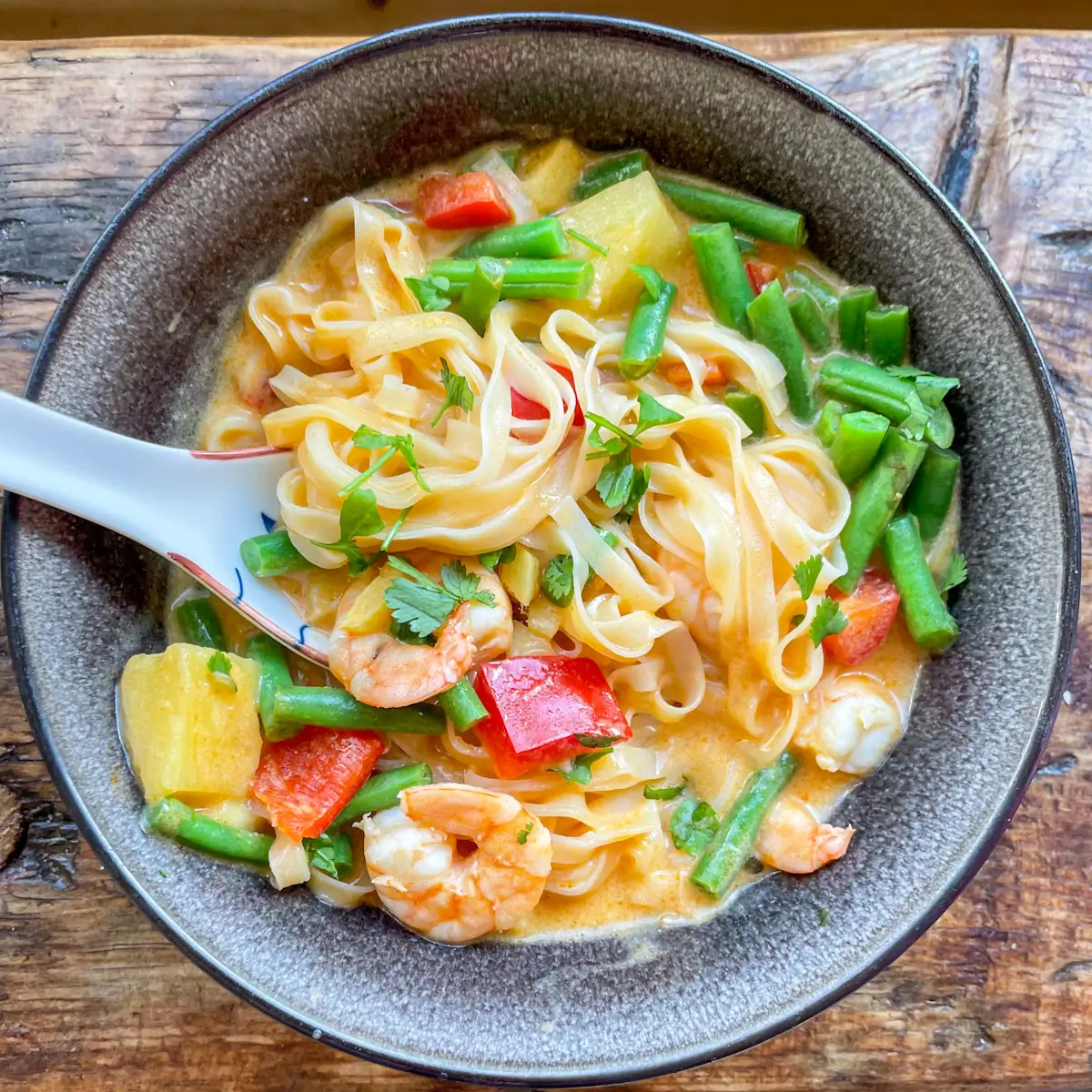
There are some dinners that are good. Some that are great. And then there are the ones that make you sit down, take a bite and immediately think oh YES…this one’s a keeper.
These one pot Thai red prawn curry noodles fall firmly into that category. They’re lip-smackingly slurpy, rich with coconut milk, gently spicy from Thai red curry paste and absolutely bursting with flavour from ginger, lemongrass and sweet pineapple. Honestly? It tastes like sunshine in a bowl.
The best part is that everything cooks together in one pan. The noodles soften directly in the curry sauce, soaking up all that flavour, while the prawns cook in just a couple of minutes so they stay beautifully juicy and tender.
It’s the sort of dinner that looks and tastes far more impressive than the effort required. Perfect for a busy weeknight when you want something quick and a little bit exciting.
If you enjoy Thai flavours as much as I do, you might also like my Thai Green Noodle Soup with Pan Fried Sea Bass, my Thai Noodle Soup with Prawns, or my Easy Thai Red Chicken Curry with Sweet Potato – all brilliant midweek dinners that bring those bright, punchy Thai flavours to the table without hours in the kitchen.
Why You’ll Love This Thai Red Prawn Curry Noodles Recipe
There are a few reasons this dish makes regular appearances in my kitchen.
- It’s a true one pot dinner – No juggling multiple pans, no cooking noodles separately – everything bubbles away together in one big pan.
- It’s quick – From chopping board to bowl in about 20 minutes.
- It’s seriously flavourful – Thai red curry paste, ginger, lemongrass, coconut milk and fish sauce combine into a deeply savoury sauce that clings to every noodle.
- The pineapple is magic – Sweet pineapple in a curry might sound unusual if you haven’t tried it before, but trust me – it balances the heat and richness beautifully.
- It’s lip-smackingly slurpy. – The best noodle dishes always are.
And of course, if you’re looking for more quick dinners like this one, you’ll find plenty in my fish and seafood recipes collection.
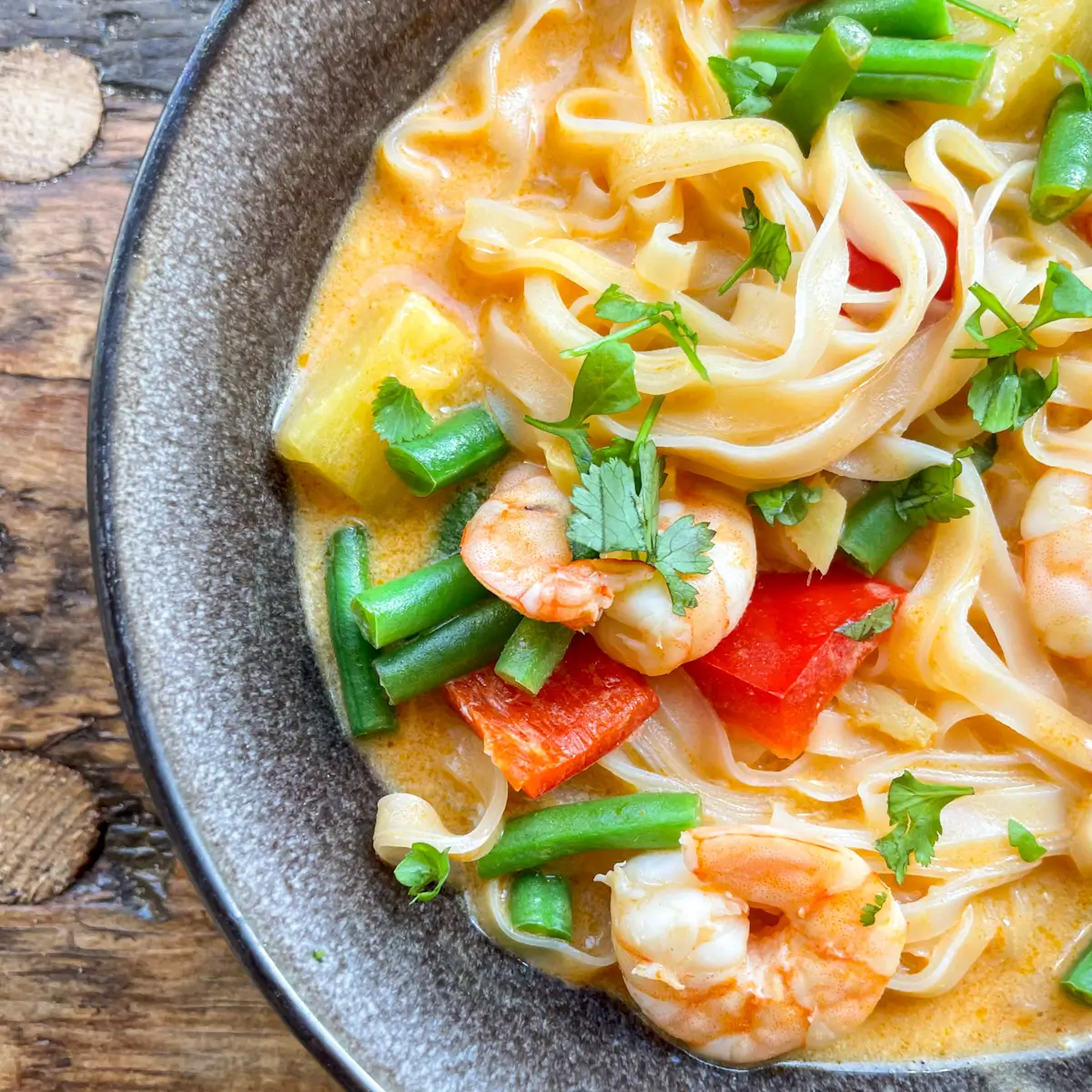
Ingredients (and Helpful Swaps)
This is one of those brilliantly flavourful dinners that relies on a handful of punchy ingredients rather than a long shopping list. Here’s what goes into the pan.
- Ginger – Fresh ginger gives warmth to the curry base. Chop it quite finely so it melts into the sauce as it cooks. If you’re in a pinch you could use ginger paste, but fresh really is best here.
- Vegetable oil – Used to gently fry the ginger and release its flavour before the curry paste goes in. If you fancy it, you could use sesame oil.
- Lemongrass – Bruised and simmered in the sauce to infuse that unmistakable Thai citrus aroma. You don’t actually eat it – it just perfumes the curry. If you can’t find lemongrass, a strip of lime zest can add a similar brightness.
- Thai red curry paste – This is where most of the flavour comes from. Different brands vary in heat quite a bit, so if you’re unsure start with a little less and add more later. I use this Blue Dragon one.
- Coconut milk – Creates the rich, creamy curry sauce. Full-fat coconut milk gives the best flavour and texture.
- Salt – Balances the sweetness from the coconut milk and pineapple.
- Palm sugar – Adds a gentle sweetness which is typical in Thai curries. Brown sugar works perfectly well if that’s what you have in the cupboard.
- Fish sauce – Salty, savoury and deeply flavourful – it gives the curry that unmistakable Thai depth. If you’re new to fish sauce don’t worry – it doesn’t taste fishy once cooked.
- Raw king prawns – Add them near the end so they stay tender rather than tough. Frozen prawns work well too – just defrost them first.
- Green beans – They add a lovely crunch and freshness that balances the richness of the curry. You could also try adding pak choi, tender stem broccoli or even some mange tout.
- Red pepper – Sweet, colourful and perfect in this kind of noodle curry.
- Pineapple chunks – This might sound unusual in a curry, but it works beautifully here. The sweetness and acidity cut through the coconut milk and chilli heat, making the whole dish taste wonderful. Fresh pineapple works too if you happen to have one.
- Flat rice noodles – These cook directly in the curry sauce and soak up all that flavour as they soften. Egg noodles or udon noodles also work well if that’s what you have.
How to Make This Recipe
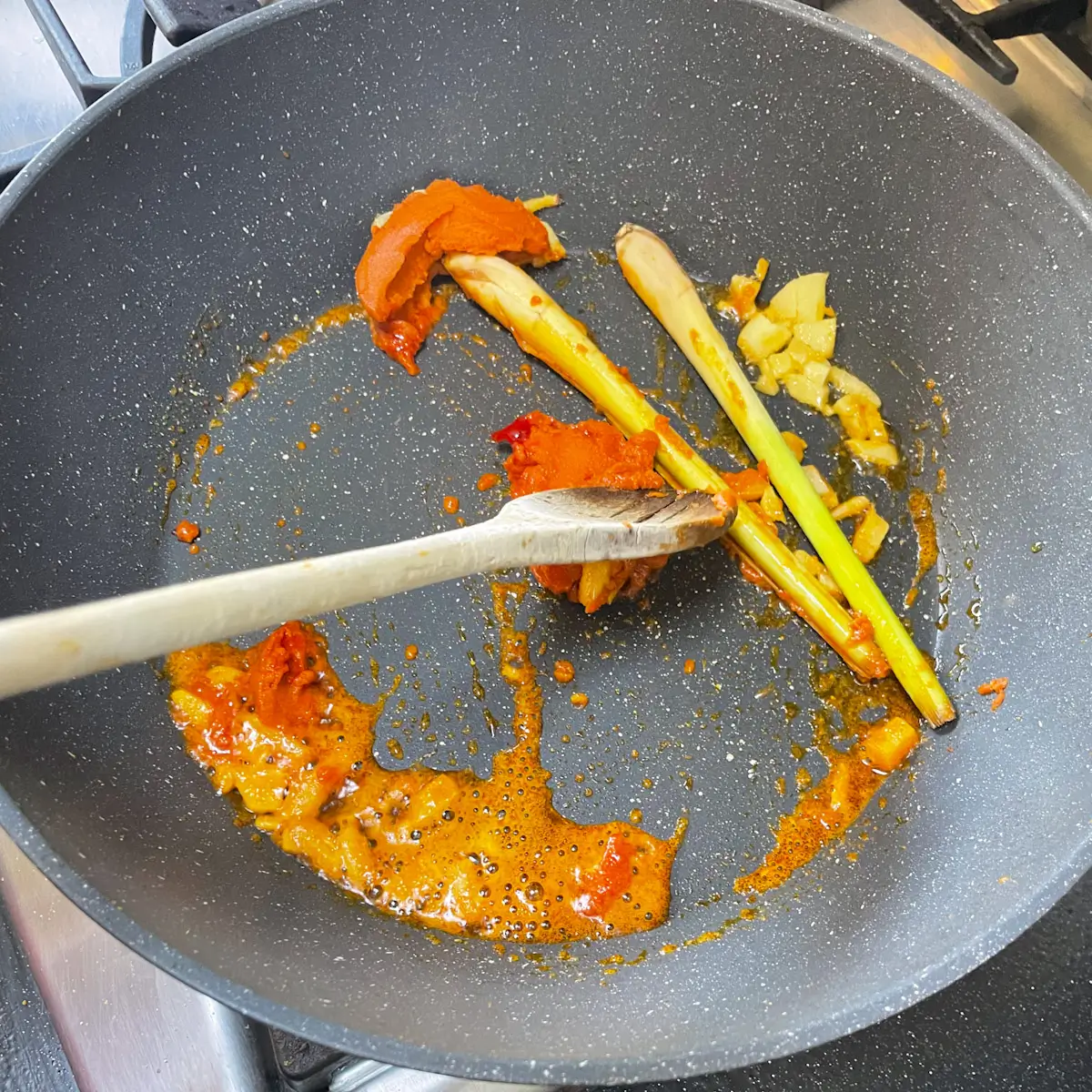
Start by peeling and finely chopping the ginger. Heat the vegetable oil in a large pan over medium heat, then add the ginger.
Bruise the lemongrass by pressing it firmly with the side of a knife and add it to the pan.
Next, stir in the Thai red curry paste. Cook for a minute or two, stirring, until everything smells incredible.
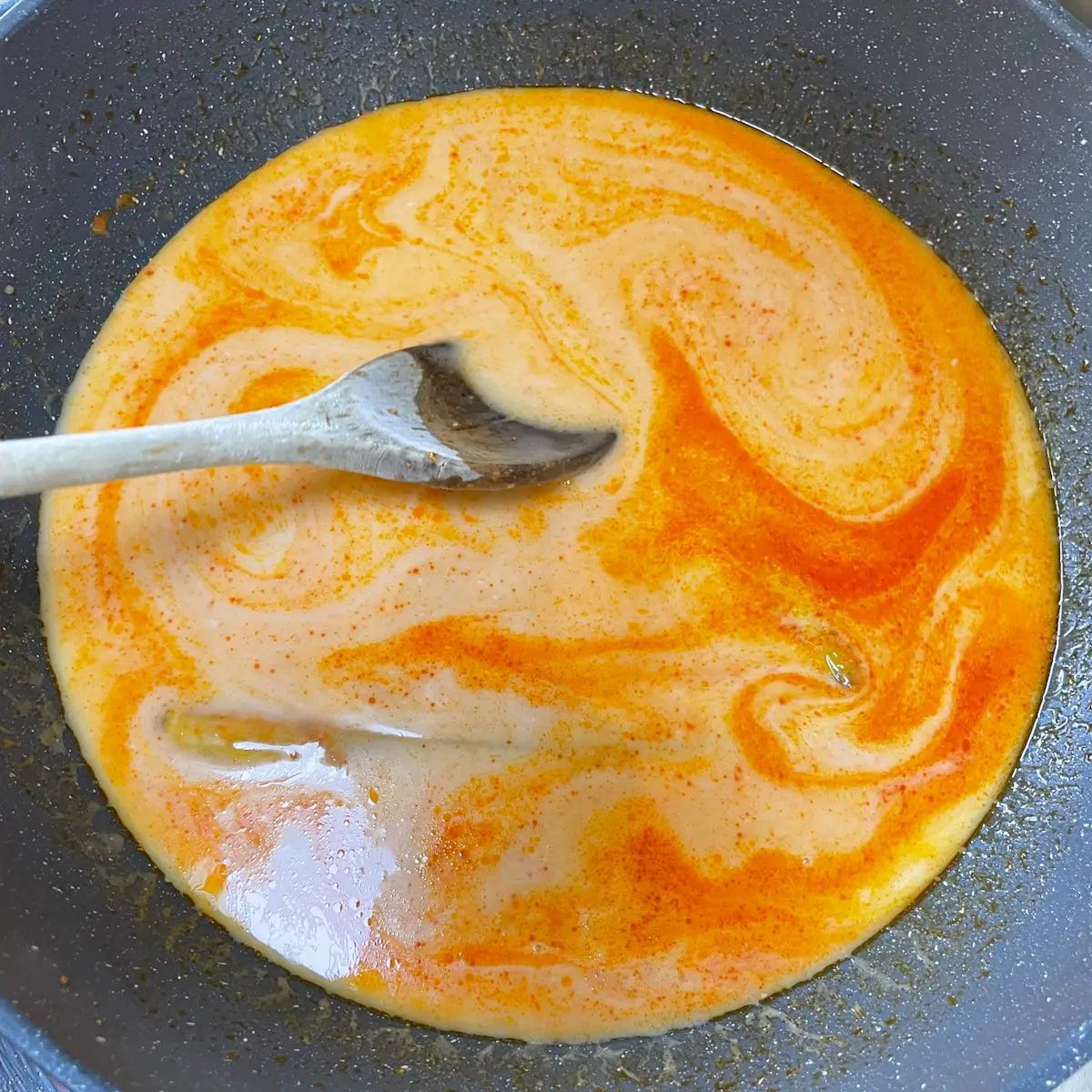
Add the water, stir briefly then pour in the coconut milk. Add the salt, palm sugar and fish sauce. Stir everything together and bring the sauce to a gentle simmer before reducing the heat to low.
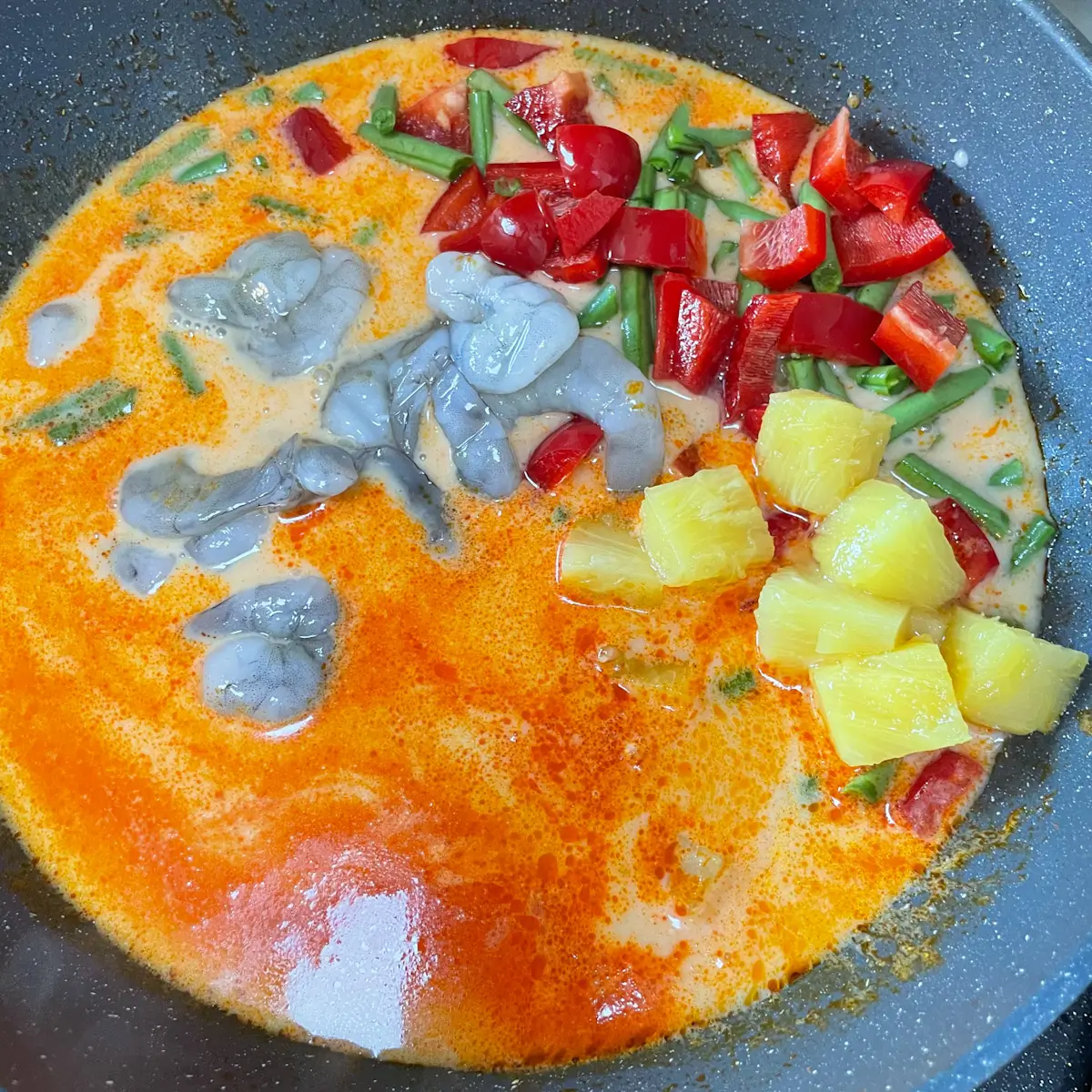
Now prepare the vegetables.
Slice the red pepper and trim the green beans, cutting them into bite-sized pieces.
Add the prawns, beans, pepper and drained pineapple chunks to the pan. Stir well and let everything simmer for about 2 minutes.
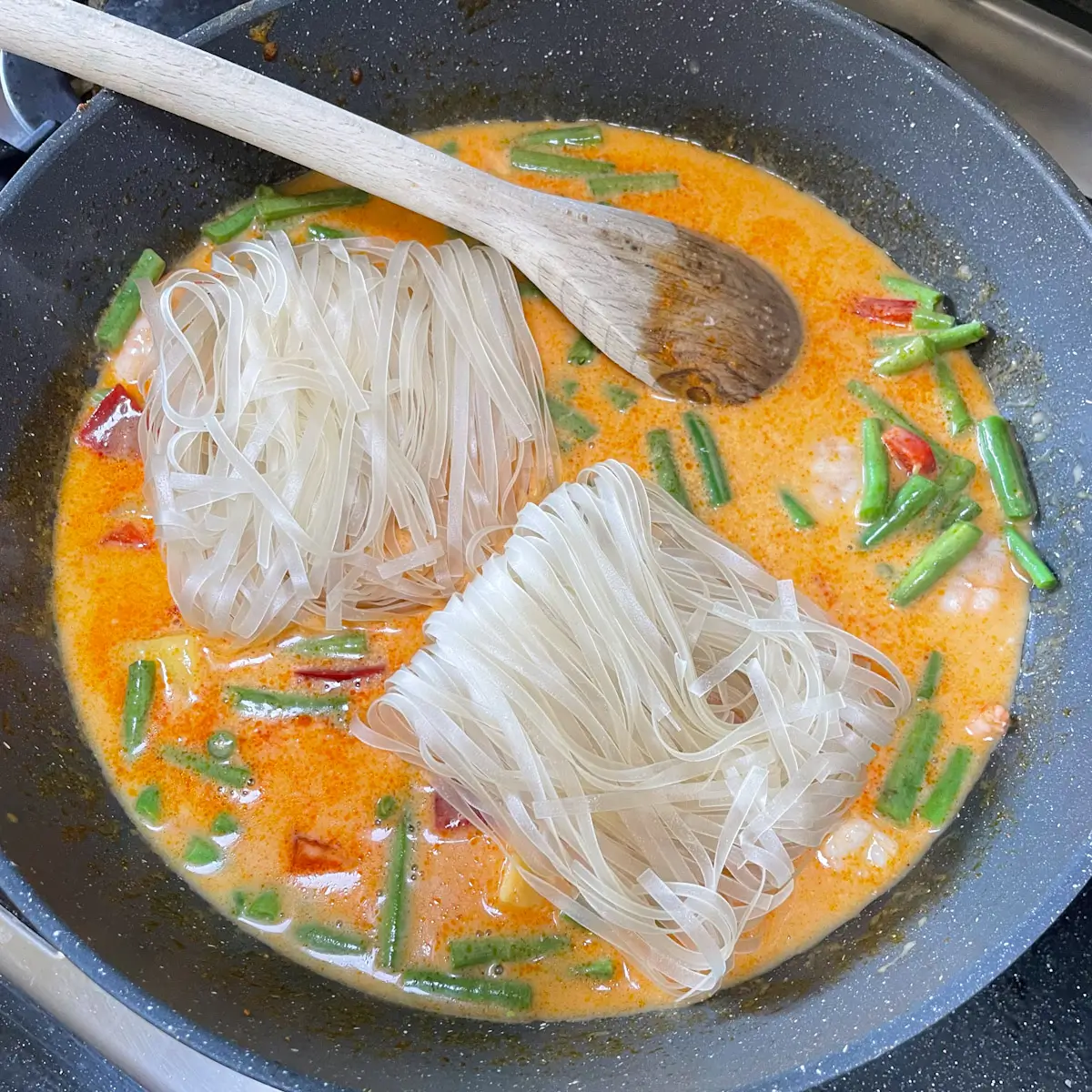
Finally, add the rice noodles.
Push them down into the curry sauce so they’re submerged, then simmer for another 3–4 minutes, until the noodles are tender and have absorbed some of the curry.
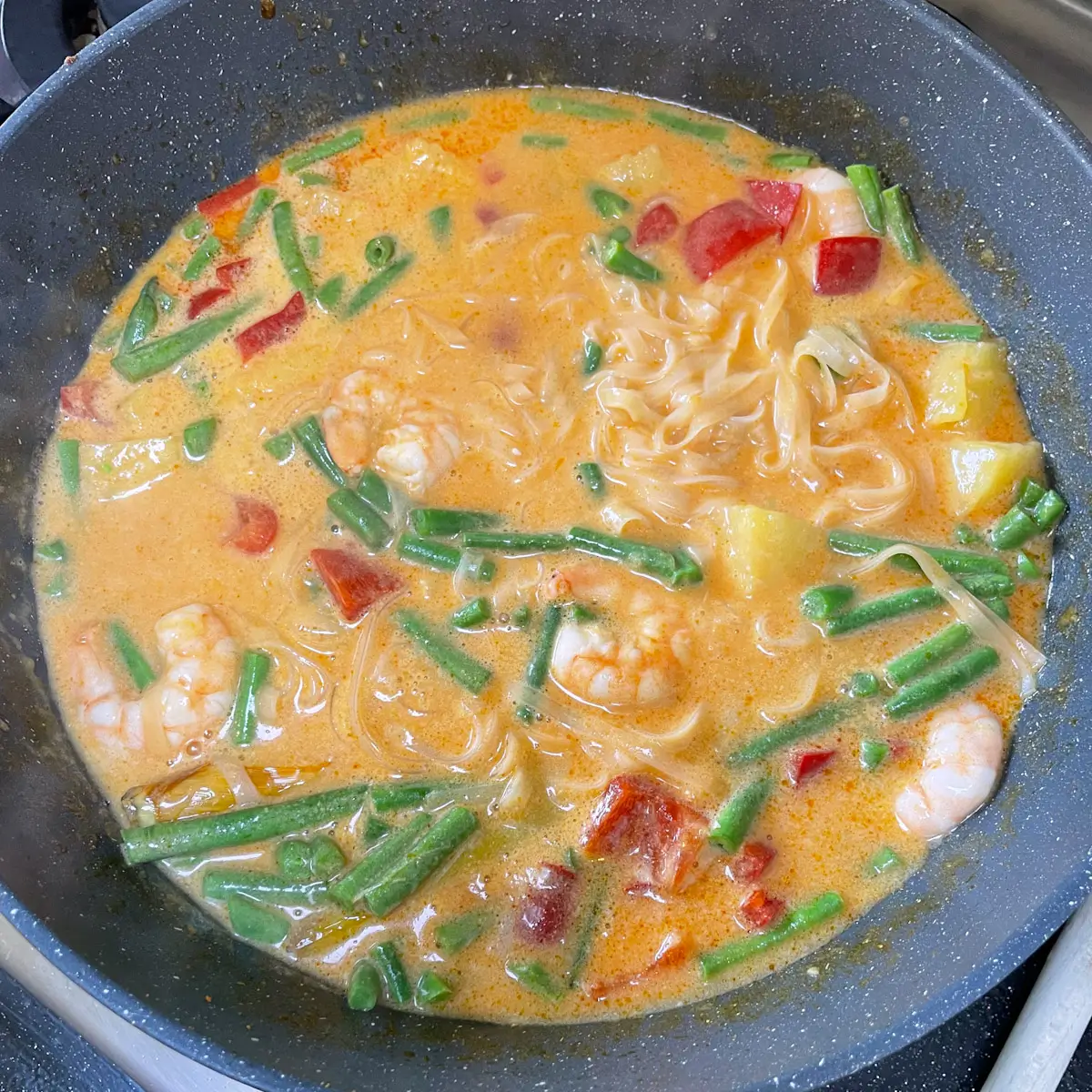
Remove the lemongrass before serving and spoon into bowls.
Then grab a fork or chopsticks and get slurping.
Why Pineapple Works So Well in Thai Prawn Curry
I know. Pineapple in curry can sound a bit…suspicious.
But trust me on this one.
That little burst of sweetness is exactly what makes this prawn curry noodles dish taste so ridiculously good. The curry paste brings the heat, the coconut milk brings the richness, the fish sauce brings the savoury depth…and then the pineapple swoops in and zings the whole thing up.
Without it, the curry would still be nice. With it? Suddenly everything tastes just more exciting.
You get these little juicy pockets of sweetness in between the saucy noodles and prawns, which balance the spice beautifully. It’s the same reason pineapple works so well in lots of Southeast Asian dishes – that sweet-salty-spicy combination is completely addictive.
And honestly, once you’ve tried it you’ll start looking for excuses to add pineapple to other curries too.
What Noodles Work Best in Curry
For this recipe, I always go for flat rice noodles.
They cook quickly, they soak up all that gorgeous curry sauce, and they give you that proper soupy, slightly messy, eat-it-with-a-fork-or-chopsticks situation (which, in my opinion, is exactly what you want here).
That said, this is a very forgiving dish. You could also use:
- egg noodles (a bit richer, slightly firmer)
- udon noodles (chunky and VERY satisfying)
- vermicelli (if you want something lighter)
The only thing to watch is cooking time. Some noodles soften almost instantly, others take a few minutes longer, so just keep an eye on them rather than blindly following the clock.
Tips for Perfect Prawn Curry
This is where the difference between nice and OH WOW happens.
- Don’t overcook the prawns (this is the big one) – Prawns are not forgiving. One minute they’re juicy and perfect, the next they’re rubbery and slightly sad. Add them right towards the end.
- How to tell when prawns are cooked – They go from grey and translucent to pink and opaque. They should curl into a gentle C shape. If they’ve curled into a tight little O, they’ve gone a bit too far (still edible, just not peak perfection).
- If your curry is too thick – The noodles will drink up the sauce as they cook (greedy things). If it starts looking a bit tight, just add a splash of hot water or coconut milk and loosen it up.
- If it’s too spicy (or not spicy enough) – Curry pastes vary WILDLY.
- Too spicy? Add more coconut milk or a pinch of sugar
- Not spicy enough? Add more curry paste or a chopped chilli
Taste as you go – always.
One Pot Thai Red Prawn Curry Noodles

Equipment
- Large sauté pan or wok
- Sharp knife
- Chopping board
- Wooden spoon or spatula
Ingredients
- 20 g fresh ginger
- 1 tbsp vegetable oil
- 2 sticks lemongrass
- 50 g Thai red curry paste
- 50 ml water
- 400 ml coconut milk
- 1 tsp salt
- 1 tsp palm sugar or brown sugar
- 1 tbsp fish sauce
- 180 g raw king prawns peeled
- 200 g green beans
- 1 red pepper
- 230 g pineapple chunks tinned, drained
- 100 g flat rice noodles about 2 nests
Instructions
- Peel and finely chop the ginger.
- Heat the vegetable oil in a large pan over medium heat. Add the ginger and cook for about a minute until fragrant.
- Bruise the lemongrass with the side of a knife and add it to the pan.
- Stir in the Thai red curry paste along with 50ml water. Cook for 1–2 minutes, stirring.
- Add the coconut milk, salt, palm sugar and fish sauce. Stir well, bring to a gentle simmer, then reduce the heat to low.
- Chop the green beans and red pepper into bite-sized pieces.
- Add the prawns, green beans, red pepper and pineapple chunks to the pan. Stir and simmer for about 2 minutes.
- Add the rice noodles, pressing them down so they are submerged in the curry sauce.
- Simmer for 3–4 minutes, stirring occasionally, until the noodles are tender and the prawns are cooked through.
- Remove the lemongrass before serving and enjoy immediately.
Notes
- Don’t overcook the prawns – Prawns cook very quickly. Add them near the end and cook for just 2–3 minutes until pink and opaque.
- Adjust the spice level – If the curry is too spicy, add a little extra coconut milk. If you’d like more heat, stir in an extra spoonful of curry paste or a chopped chilli.
- If the curry becomes too thick – Rice noodles absorb liquid as they cook. If the sauce thickens too much, simply add a splash of hot water or coconut milk.
- Noodle alternatives – Flat rice noodles work best, but egg noodles or udon noodles can also be used.
More Fish and Seafood Recipes
If you enjoy cooking fish at home, you’ll find plenty more inspiration in my fish and seafood recipes collection. Fish is brilliant for weeknight dinners – it cooks quickly, feels light and fresh, and can be packed with flavour.
Try some of the most popular recipes from the site:
- Pan Fried Sea Bass with Olive Linguine – crisp-skinned sea bass served with a punchy olive pasta. Simple but incredibly satisfying.
- Asian Style Whole Baked Black Tilapia – a fragrant oven-baked fish with bold Asian flavours.
- Lightly Smoked Salmon with Crushed New Potatoes and Mustard Cabbage – a fresh, elegant dish that works beautifully for lunch or dinner.
- Baked Cod with Creamy Chorizo Beans – flaky cod served with rich, smoky beans. A proper flavour-packed dinner.
If you’re looking for easy fish dinners for tonight, these recipes are a great place to start.
Salty, sharp, spicy and sweet – this curry has everything